Foundation asks Muslims to make a difference at home this Ramadan
(August 14, 2010) – Muslims are being encouraged to be active contributors to Canada by directing a portion of their charitable donations during Ramadan to local projects.
The Olive Tree Foundation has launched its 7th Annual Ramadan Campaign encouraging Muslims to share part of their annual charitable donations with deserving community initiatives within Canada.
”Canadian Muslims can make a significant contribution to our society if we were to direct a portion of our charitable donations annually to projects in this country,” Muhammed Haseeb Ali, Treasurer of the Olive Tree Foundation told Iqra.ca.
The Olive Tree Foundation is a philanthropic foundation that promotes community development through the collection of endowed funds and charitable contributions, to fund services for the long-term benefit of the community.
“The Olive Tree Foundation has distinguished itself, in a quiet and unassuming way, for being one of the most important and forward thinking organisations established in Canada,” says Dr. Kathy Bullock.
Dr. Bullock is the Director of the Tessellate Institute (TTI), a policy institute and think tank.
“Since its founding in 2004, the Olive Tree Foundation has served our community with excellence. They have supported projects that address real needs in our community, of women and girls, of children and education, and of disabled Muslims,” she said.
In six years, donations from the Ramadan Campaign have funded 20 projects, many of which have made a significant contribution to the community’s development.
“These projects would not have been made possible without funding from the Olive Tree Foundation,” Muhammed Haseeb Ali said.
“A foundation is an institution that has been part of the Muslim historical experience and has, in the past, provided for the flourishing of the Muslim contribution to societies,” he added.
Further information on the Foundation can be found at www.olivetreefoundation.ca; and to make a donation click here
Disappointment – and hope – after Cairo
By Sheikh Ali Gomaa
Last month marked the first anniversary of US President Barack Obama’s speech to the Muslim world in Cairo where he sought “a new beginning between the United States and Muslims around the world; one based upon mutual interest and mutual respect.”
However, the hope that greeted Obama’s speech has turned into disappointment as people realised that turning promises into reality is not easy to achieve. While he should be congratulated on his efforts to change the discourse of US policy towards the Muslim world, it is clear that people expect more than simply statements from him.
It is vital to rekindle the new spirit that accompanied Obama’s speech and to discuss together how we can transform it into practical programmes that bridge the concept of dialogue with real and effective partnership between East and West.
I believe there are several ways that can help forge a constructive partnership between the Muslim world and the United States. The Qur’an teaches us: “We have created you male and female, and have made you nations and tribes that ye may know one another” (49:13) When God says to “know one another” He does not mean in order to kill one another. All religions have forbidden the killing of innocents. Rather, we have been ordered to cooperate in a constructive manner.
The need for dialogue between people of different faiths and cultures is far greater today in view of the problems faced in the relations between peoples and communities. Dialogue stems from the recognition of identities and specificities. The Qur’an insists that the world’s beauty lies in its racial and religious pluralism, otherwise God would not have created it so (see verses 10:99 and 5:48).
Many find such ever-growing closeness and communication enriching, but for others it can be a source of confusion and intimidation.
Constructive dialogue is indeed a powerful tool in conflict prevention, management and resolution. But we still need to work harder on many fronts.
There is, for example, an urgent need to promote the value of cultural diversity through education. We must strengthen educational systems with a wider vision so that young people can benefit from cultural diversity and accept the “other”. We must also endeavour to clear misconceptions and misinterpretations, which often mar our attitudes towards the other. These include the position of women in Muslim societies, the role of Islamic law, the right of minorities, and so on.
These must be discussed honestly, and effort must be made to understand the broader historical, theological and cultural premises and dynamics.
This can only be achieved in an environment that respects international legitimacy, religious distinctiveness and the cultural traditions of people. Any reform must stem from societal reality, cultural and religious specificities, convictions and their epistemological outlooks. Reform cannot simply be imposed. Furthermore, there is a critical need for global Muslim representative bodies such as the Organization of Islamic Conference (OIC) which, together with the Fiqh Assembly in Jeddah – which deals with Islam and modernisation – and the scholarly assistance of institutions such as Al Azhar and the Islamic Research Assembly in Egypt, can become key focal points for the development of moderate and peaceful Muslim discourses.
However, it is necessary that balanced foreign policy be the basis for improved relations. For the Muslim world, and particularly its clerical community, it is important that the rule of law prevail in times of conflict. Most immediately among Muslim world opinion, this needs to be applied to the Palestinian-Israeli conflict removing long-standing suffering from the Palestinian people. Moreover, a just peace is a necessity for the success of any initiative that seeks to achieve a genuine rapprochement between the United States and the Arab and Muslim World.
The responsibility of an improved relationship between the Muslim world and United States falls on both sides. I feel that this is not only possible, but it is in fact the only way we can build a brighter and more prosperous world for our children. With cooperation and respect, I believe that no task is impossible.
###
* Dr. Ali Gomaa is the Grand Mufti of Egypt. This abridged article is distributed by the Common Ground News Service (CGNews) with permission from the author. The full text can be found at newsweek.washingtonpost.com/onfaith.
High school students get ready to be MISTified
(April 18, 2010) – Muslims high school students in the Greater Toronto Area are gearing up to compete in the Muslim Interscholastic Tournament (MIST) to be held on May 21-24 at University of Toronto, St. George Campus.
“Over the last three years, MIST has become one of the largest Muslim youth initiatives in the North America,” Hamzah Moin, Regional Director of MIST Toronto, told the MIST pre-launch Gala last Friday evening at the ISNA Canada Centre in Mississauga.
“The 2008 tournament had 80 competitors and 30 volunteers and judges. In 2009 the tournament had almost 300 competitors and 60 volunteers and judges. This year we are expecting 500 competitors and 100 volunteers and judges.”
MIST (Muslim Interscholastic Tournament) is famous for being a fun, educational, interactive program of competitions and workshops geared towards bringing high school students together from around the nation to develop leadership, communication, and other creative skills, all while gaining a deeper understanding of Islam and Muslims.
Keynote speaker at the gala, Toronto lawyer Faisal Kutty, spoke of his personal experiences as a teenager and the impact of youth activities such as MYNA (Muslim Youth of North America) in reconciling his Muslim faith with his Canadian identity.
Sheik Abdalla Idris of ISNA Canada led a fund raising appeal and encouraged the audience to bring ‘joy to the hearts of youths’ by supporting MIST.
Muneeb Nasir, President of the Olive Tree Foundation (OTF), in announcing a grant from the OTF to support of this year’s tournament, commended the organizers and volunteers for their exceptional service.
The evening included an engaging debate between a brother and sister duo and a cameo appearance by the up-and-coming group nasheed band, Halal Meat.
MIST was founded in 2001 by a freshman at the University of Houston who saw a need for a program that can guide high school students in all aspects of their academic and personal life. She saw that high school students needed a place where they can belong and feel like they are contributing to their future careers as well as their community. She decided to start a tournament that combined many aspects of the academic arena including art, writing, and community service.
In May 2001, she presented the idea to several dedicated members of the Houston community from various backgrounds, as well as officers of the MSA at the University of Houston. With their help and encouragement, the first tournament took place in 2002 with about 150 students from Houston, Austin, and Dallas. Today, the tournament is held across many cities and currently has thousands high school participants across North America.
This year’s MIST theme is “Lantern of Modesty: Reflecting the Light from Within.”
To find out more about MIST and to support this youth initiative, visit www.misttoronto.ca
Film screening opens up lively inter-faith dialogue

Muneeb Nasir and Dr. Kevin Livingston at Don Heights Unitarian Congregation
(Dec 1, 2009) – The Don Heights Unitarian Congregation and Initiatives of Change (Canada) hosted an interfaith dialogue following the screening of the award winning documentary film, The Imam and The Pastor, on Sunday November 29, 2009.
The film tells the story of Pastor James Wuye and Imam Muhammad Ashafa who led opposing, armed militias, dedicated to defending their respective communities as violence broke out in Kaduna, northern Nigeria in the 1990s.
In pitched battles, Pastor James lost his hand and Imam Ashafa’s spiritual mentor and two close relatives were killed. Now the two men are co-directors of the Muslim-Christian Interfaith Mediation Centre in their city, leading task-forces to resolve conflicts across Nigeria.
Following the film presentation, Rev. Debra Faulk of Don Heights Unitarian Congregation introduced guest panellists, Dr. Kevin Livingston and Muneeb Nasir, who engaged in a lively and honest inter-faith dialogue with the audience and reflected on the film based on their faiths, Christianity and Islam.
Dr. Kevin Livingston is Senior Pastor of Knox Presbyterian Church and an instructor at Tyndale Seminary and Muneeb Nasir is President of the Olive Tree Foundation and a volunteer chaplain and Khateeb (visiting Imam) on the University campuses and Masjid Toronto.
Dr. Livingston commented that Canadian religious communities do not face the same issues portrayed in the film but better relationships among local faith groups are needed.
Muneeb Nasir talked about the great difficulties Muslims face, at this moment in history, in explaining to their fellow citizens the value of peace that is so deeply ingrained in the Islamic teachings. He commented on the need for Muslims to strengthen alliances with other faith communities who would be able to articulate to Canadians the higher values found in Islam and which they all share.
Initiatives of Change Association (Canada) is the Canadian associate of a global network open to people of all nationalities, cultures, religions and beliefs who work toward change locally and globally, starting with change in their own lives. Formerly known as Moral Re-Armament, this network has been active on every continent for over 60 years.
Toronto Celebrates Charter for Compassion
(November 20, 2009) – Toronto residents took part in the launch of the Charter for Compassion last week by holding lectures, discussions, film screenings, reflective walks and dedicating weekly sermons to the topic of compassion.
The Charter for Compassion, officially launched on November 12, is a 330-word document that was crafted by people from all walks of life, nationalities, beliefs and backgrounds with the intent to unify, inspire and bring compassion back into the heart of society.
The Charter initiative was funded out of the Ted Prize, awarded every year to three “exceptional individuals,” and includes $100,000 and the granting of “one wish.”
Karen Armstrong, winner of the 2008 TED prize, had the wish “that you would help with the creation, launch and propagation of a Charter for Compassion crafted by the three Abrahamic traditions of Judaism, Christianity and Islam and based on the fundamental principle of The Golden Rule.”
Events to commemorate the launch of the Charter took place across the globe from Australia and South Africa to Argentina and Thailand with more than 100 partner organizations.
To celebrate the launch, Muslim Presence Toronto, one of the many world-wide partner organizations, produced a large ‘Wall of Compassion’ banner which sought to remind people that they already share the core principles of compassion.
“I am very inspired by the Charter for Compassion which is centered on the Golden rule – ‘do unto others as you would have them do unto you,” says Afaun Mandol of Muslim Presence Toronto, organizer of the Wall of Compassion.
“We will be asking those who agree with the statement to pledge to integrate it into their life by signing the Wall of Compassion.”
On the day of the launch, November 12, the Tikkun Toronto group met at noon in the heart of High Park, the city’s largest park, in a labyrinth shadowed by a grove of oak trees.
The Charter for Compassion was read and the group took part in a reflective walk of the labyrinth and affirmed the Charter by signing of the Wall of Compassion.
Later that evening, Scarboro Foreign Missions, another partner organization featured a premier presentation of ‘Animating the Golden Rule,’ a new documentary film by Tina Petrova, followed by an interfaith panel discussion on compassion at the Multi-Faith Centre at the University of Toronto. Muslim Presence Toronto also took part in the gathering and invited attendees to sign the Wall of Compassion.
Around the city, the Muslim Friday sermons on November 13 were dedicated to the topic of mercy and compassion.
At the Anatolia Islamic Centre in Mississauga, Taha Ghayyur reminded the congregation in his Khutba (sermon) of the importance of compassion and mercy in the Islamic sources.
“It’s interesting to note that God uses the word Rahma, meaning compassion and mercy in Arabic, and its derivatives 326 times in the Quran,” he said.
“Allah did not limit His Mercy to those who believe in Him only and the Prophet Muhammad, peace be on him, shared his compassion with his neighbours and anyone he saw as disadvantaged, oppressed or needy in the community, regardless of his or her faith,” Ghayyur added.
He challenged the audience to engage in sharing and compassionate works.
“If God and His Prophet didn’t limit their mercy and compassion, what is holding us back from sharing our humanity?” he said. ”Borrowing a phrase from Piero Ferrucci, we should be concerned about the ‘global cooling’ of relations, in a world where genuine love, compassion, care, and warmth are quickly fading.”
In the east end of Toronto, Irshad Osman delivered the Khutba at the Danforth Islamic Centre, and invited the congregation to reflect on the Allah’s Mercy and Compassion for all of His creation.
“The earth we live in, the air we breathe, the nature we enjoy, the rain we benefit from are all signs of Allah’s Mercy,” he said. “These bounties in nature are not solely for us; but for every living being on earth.”
Osman then spoke of living the ethic of reciprocity in all aspects of daily life.
“For our family, friends and relatives let us live by the Prophetic advice, ‘Love; you will be loved; Forgive; you will be forgiven’; for people in need, ‘Help them as you would like to be helped’; and for relating to fellow human beings, he invoked the Qur’anic verse, ‘Treat them with kindness and justice.’
Delivering the Friday Khutba in the historic Hart House building of the University of Toronto, Muneeb Nasir reminded the congregation of the urgent need for a focus on compassion in an increasingly fractured world.
“While we are all connected as never before in human history – electronically, economically and politically – we are experiencing disconnectedness,” he said.
“We have a choice – we can choose to be bystanders, throw our hands up and despair or we can choose to become aggressive and isolate ourselves or we can be courageous and cultivate relationships based on compassion.”
“Compassion which requires us to put ourselves into the place of the other requires courage; cowards need not apply,” he added.
Nasir then reminded the audience of the nature of the relationships that Islam wants Muslims to develop.
“Compassion is connected to our capacity to love – love for others what we love for ourselves – as the Prophet Muhammad advised in the famous tradition,” he said. “When we give of ourselves we must give of what we most love as Allah says in the Qur’an, ‘You will not attain piety until you give of what you love’.”
AFFIRM THE CHARTER -> www.charterforcompassion.org

- Afaun Mandol, Muslim Presence Toronto, organizer of the Wall of Compassion

Community engagement on niqab issue needed
By Muneeb Nasir
(November 6, 2009) – The niqab furor in Canada has left Muslims in a dilemma.
One very vocal organization has called for its legal ban in Canada because, they argue, the niqab as well as the burka are “political symbols of Saudi-inspired Islamic extremism.”
Most other Muslim groups responded by saying that such a ban would contravene fundamental principles of our free and democratic society – ”the state has no business in the wardrobes of the nation.”
Meanwhile, a few religious leaders have spoken out on the religious basis of the niqab.
They have stated that since the niqab has justification in the various schools of law, women who don it are fulfilling their religious obligation by demonstrating a higher level of piety.
As these Imams are from the ultra-orthodox orientation (traditionalists and literalists), they offer no interpretation on the niqab’s relevance in Canadian society but simply state what is in legal books.
A vast majority of religious leaders have been silent but, in private, they would say that the niqab is not compulsory and some of them would go as far as saying that, based on their interpretation, it should not be encouraged in Canada.
Their reluctance to speak out has to do with not wanting to be seen as denying a right to a tiny minority within the community who choose to wear the niqab because of their sincerely held personal beliefs.
But also coming into play in this issue, as it was in the Sharia arbitration case, is the belligerence of the group calling for a legal ban on the niqab –contentiousness, both in their approach as well as their relationship, to the majority of the Muslim community.
Rather that presenting cogent arguments as to why the wearing of the niqab is not relevant or appropriate or desired in Canada and engaging the rest of the Muslim community, they have appealed to the law.
In a level-headed editorial on October 13, The Globe and Mail recommended engagement instead of resorting to legal means to resolve religious differences: “…the critics must not harm the people they aim to protect. Sartorial legislation would require invasive enforcement practices. Communities that value the veil would feel legitimately aggrieved and would close ranks. Rather than appealing to the law, communities need to engage each other.”
The Canadian Muslim community needs courageous religious leaders of the calibre of the late British scholar, Shaykh Syed Mutawalli Darsh, who can step forward and rise above the rancorous noise of a contentious religious issue that has implications for the entire community and provide reasoned positions.
Shaykh Syed Mutawalli Darsh who was a prominent UK scholar did not believe that the niqab was necessary, or even recommended by the Prophet for women to wear.
But if you were going to argue that niqab was a recommended act, he explained his opinion in the following way:
•Some people believe that niqab is recommended (sunnah)
•Everybody believes that inviting people to Islam (da’wah) is obligatory (fardh)
•The niqab is often a very significant barrier to da’wah in the West where the concept of face covering has never been known
•If a recommended act is a barrier to an obligatory act, one must not sacrifice the fardh for the sunnah
A reasoned justification for not wearing the niqab in this society but, also, one that seeks to engage others in an intra-community discussion and not alienate them.
What do the world’s 1 billion Muslims really think?
By Muneeb Nasir
(October 27, 2009) – What do the world’s 1 billion Muslims really think?
A new documentary film based on a Gallup Poll report that seeks to answer this question, and carrying the title — Inside Islam: What a Billion Muslims Really Think — will have its Toronto premiere on Friday, October 30 at the CNE Queen Elizabeth Theatre.
The documentary reports on the survey’s surprising findings and implications, and brings it to life, interviewing researchers and others who conducted the public opinion polling.
As part of this groundbreaking six-year project, Gallup conducted fifty thousand interviews with residents in 35 predominantly Muslim nations, as well as smaller populations in Europe and the USA.
The broad extent of the polling has delivered findings for the world’s 1.4 billion Muslims with a plus or minus accuracy of 3%.
“The most important finding that we uncovered was that the clash or the conflict that does exist right now between the United States and Muslim majority countries is based on policies and not on a clash of principles,” Dalia Mogahed, executive director of the Gallup Center for Muslim Studies said at a special premiere of the film held at the ISNA continental convention in Washington earlier this year (July 3 – 6, 2009).
Mogahed, who appears in the documentary, is a member of U.S. President Barack Obama’s Council on Faith-Based and Neighborhood Partnership.
The film focuses on issues of gender justice, terrorism and democracy, and it challenges the notion that Muslims and the West are on a collision course.
Like the research, the film highlights a shared relationship that is based on facts, not fear.
Mogahed described several surprising findings in the study.
“We found Muslim admires much of the same things that Americans admire about ourselves,” she said.
On extremism, Mogahed said, Americans and Muslims are equally likely to find attacks on civilians as morally unjustifiable. On democracy, Mogahed pointed out that a large majority of Muslims would guarantee free speech if it was up to them to write a new constitution.
“When we asked Muslims what do you admire most about the West, the two most frequent responses were Western technology and democracy and liberty” Mogahed said.
“Even more remarkable is that when we asked a representative group of the American public, what is it that you admire most about western civilization, they said western democracy and western technology- amazing that the same responses were given by such a diverse group of people to an open ended question.”
Those polled also said that religious leaders should have no direct role in drafting such a constitution. On gender equity, a majority of Muslim men in most countries agreed, for instance, that women should be able to hold jobs.
In addition to Dalia Mogahed the film features John Esposito, University Professor, Georgetown University, Rami Khoury, Editor of the Daily Star (Beirut) and Kenneth Pollack, Director of Research, Saban Center for Middle East Policy at the Brookings Institute.
The Toronto premiere will be followed by a panel discussion with Alex Kronemer of Unity Productions Foundation, producers of the film and Imam Hamid Slimi, The President & Founder of Faith of Life Network, one of the sponsors along with Sheikh-IT Entertainment.
For more information on the premiere please visit: www.insideislam.ca
Ramadan – A time to gauge Muslim institutions
By Muneeb Nasir
(August 28, 2009) – The month of Ramadan is an excellent time to get a reading on the state of Muslim institutions in Canada.
The priorities of the community are showcased, the level of maturity is evident and the changing demographics in areas of cities are seen.
I visited one of the city’s oldest mosques in Toronto recently and was surprised by the drastic change in the demographics of the congregation.
It once had a mix of people, originating from all parts of the world, who were generally integrated into the society.
Now, its congregation is primarily new arrivals from Africa, many recent immigrants and refugees.
The previous congregants have built mosques in the suburbs and moved on.
Yet, this mosque has not advanced much in the services it provides.
It is not in tune with its locale or membership whose needs go beyond spiritual ones to requirements for social, integration and counseling services.
This frozen-in-time situation is repeated in many mosques and Muslim institutions throughout the country.
The priorities of most institutions continue to be on building, acquiring or renovating real estate – to such an extent that a ‘27th night of Ramadan’ malady has taken hold of the community in which fund raising is the main preoccupation of the day. (Of course, there are institutions that have no choice but to do this type of solicitation because they occupy aging buildings or their numbers overshoot their physical space).
But the fund raising frenzy in Ramadan that grips the Muslim community has a great deal to do with poor organizational planning, institutions living and dreaming beyond their means or the general lack of appreciation that communities and capacity are not built with bricks and mortar but with people and through the services provided to them.
Quite a few Centers have chosen to create cultural zones representative of mosques in their members’ country of origin.
This may be a quaint attraction for the occasional visitor who can get a ‘taste of the world’ experience by traveling through these institutions but it also says a lot about the level of understanding of these communities on their role in this country.
So, sadly, the maturation of the Muslim community in big cities, such as Toronto, seems stunted.
Yes, large numbers of people go to the mosques in Ramadan to fulfill the religious rituals but they are totally disconnected from the institution.
What a decade ago was possible now seems improbable.
The process of deculturalizing Islam from immigrant Muslim practices and then localizing it into a Canadian context has slowed.
Institutions where this is possible are reduced to a handful.
Cultural, traditionalist or rules-based scripitualist Islam have become entrenched in most mosques.
The spin-off effect from all this is that women, activist Muslims, students, youths and new Muslims are formulating services and creating alternate institutions outside of mosques to fill the void.
Women have generally given up on mosques and Islamic Centers.
They may go there to pray occasionally but they have no inclination to do anything for or about these institutions.
Younger Muslims are channeling their energies through student, youth and sports associations.
Socially active Muslims are spawning creative services and programs– everything from new Muslims support groups, professional associations, advocacy groups, weekend intensives and educational conferences to matchmaking services.
They are congregating and holding their activities in restaurants, cafeterias, schools, campuses, convention centers (when confronted with the question of ‘where shall we hold our program?’ the answer is ‘not in a mosque; too many restrictions and hassles; women not allowed…’).
Islamic Centers, which traditionally served as the nucleus, gathering place and creative center of the Muslim community, has been reduced to a restrictive and ritualized prayer facility or children’s school.
Leaders may gloat about the success of their organization by looking at the number of attendees in Ramadan.
A better indicator for them would be to ask the questions – Where have they gone? And why have they gone? – the day after Eid-ul-Fitr.
Let’s not allow moonsighting to strain family relationships
By Muneeb Nasir
(August 20, 2009) – Starting Ramadan on the same day in North America is no longer just a community issue but it has percolated down to become a family one.
Many extended families are finding themselves in a most difficult position where family members are starting and ending the month of Ramadan on separate days because they attend different Islamic centers or subscribe to different views.
This is a pitiful state for a religious community to be in, especially one that values relationships so highly.
Indeed, it is a crisis of authority at all levels – from leaders to followers.
Will Muslims be able to start and end the month of Ramadan on one day in North America?
Occasionally, but it would not be by consensus any time soon.
It would only be as a result of circumstance – that is, if the moons align properly it may happen once in a while.
So improving this most difficult situation should be the objective of leaders and followers alike and new approaches are required.
The issue needs to be framed properly.
It is no longer about the validity of various theological positions but it is about authority in the Muslim community.
Firstly, deciding when to begin and end Ramadan and celebrate Eid is not an individual decision and any credible Imam or leader should be teaching his followers the importance of being with the congregation (jamaat).
Secondly, deciding when to begin and end Ramadan and celebrate Eid is not an individual Mosque’s decision but a community one and any Imam or leader should know this and support one of the North American bodies that have credible scholars who give Islamic rulings.
Thirdly, it is important that decisions of this sort be made in North America and not by bodies or individual scholars outside of this community and as such, however right those Imams and Mosques believe they are to follow Middle Eastern rulings, they must know that we are living here and this is our home, and working towards unifying our local community is one of their most important priorities.
Finally, keeping families together is more important than the finer legal points.
Let us all agree, followers and leaders alike, that both the Fiqh Council of North America and the Hilal Committees are both credible bodies in North America with qualified scholars who are doing their best and we should not spend our time trying to find out who is more right.
And let families come to a consensus before the major Islamic events that they will not allow themselves to be divided at these most important times of the year.
Celebrating Family and Diversity – History of the Islamic Foundation of Toronto Part 3
By Muneeb Nasir
[This is the third part in the series covering the history of the Islamic Foundation of Toronto, one of the first Islamic Centers to be established in Toronto. Many of the men, women and young people involved in the Islamic Foundation would become leaders and community activists in the North American Muslim community well beyond the confines of this mosque – a testimony to the dynamism of the Foundation in the early decades].
The 1970s were a period of flowering for the community of the Islamic Foundation of Toronto.
The activities of the organization were moved into the newly acquired building at 182-184 Rhodes Avenue. The building consisted of 2 floors and a basement; the main floor was converted into a prayer hall and the upper floor was used as a multi-purpose hall for social events and to conduct educational classes; adjoining, the main building was a house that was rented out.
As one of the few Muslim facilities in the city, the Islamic Foundation of Toronto was soon to become a hub for the community.

Abdul Hai Patel
The Friday prayers were established and conducted by volunteer Khateebs, among them were Farouk Ghanie and Abdul Hai Patel, and the community’s weekend educational and social activities had now found a home.
The Muslim community in Toronto in the 1970s went through an increase in its population with the change in immigration policies allowing immigrants to come in from many developing nations.
This diversity of the growing community was soon reflected in the membership of the Islamic Foundation.
The organization attracted newcomers from the Middle East, South East Asia, the Caribbean, Africa, and the membership included families, students and new converts to the religion.

Abdullah Hakim Quick
A new Muslim who pronounced his testimony of faith (shahadah) in the Islamic Foundation was Abdullah Hakim Quick, who would later become a popular Imam at Toronto’s Jami Mosque.
Hakim Quick took his shahadah in 1970 from a well-known American Muslim leader, Dr. Ahmad Sakr, who was visiting the Foundation to conduct an educational camp.
In 1972, the Presidency of the Foundation passed from Dr. Fuad Sahin to Hasib Khan.
In the subsequent years, most of the founding Directors were to move on and, by 1976, the composition of the Board reflected new faces – the President was Mahmoud Khaial, the Secretary’s position was held by Abdel Moniem Abdel Fattah and the Treasurer was Mohamed Nasir.
Mahmoud Khaial, who lived close to the mosque, established the daily prayers and held halaqas for the Board members to improve their religious understanding and cement relationships.
During the mid-70s, the building was to go through extensive renovations, much of it carried out by the membership.
The outer façade of the building was upgraded, the prayer area on the main floor was transformed into a welcoming space, and the upper level and basement were renovated to allow for social functions and weekend classes.

Mohamed Nasir
Much of this renovation was spearheaded by Mohamed Nasir who would assume the presidency of the Islamic Foundation during this period and was re-elected to the position, almost uninterrupted, until the mid 1990s.
The programs and activities of the organization were also to increase – children’s classes were held regularly on Sundays followed by a Tasfir and a discussion circle.
The Sunday gatherings would become the focal point for meeting and socialization of the membership.
By 1977, the Friday prayers were conducted by Dr. Sanaullah Ansari, an educator, who also taught the children’s classes on Sundays.
Family and children’s camps, special lectures, dinners and Iftar gatherings in Ramadan were on the calendar of yearly activities of the Foundation.
The Iftar dinners on Saturdays in the month of Ramadan were highly anticipated events and were a showcase of the community’s cultural and culinary diversity with each week’s dinner being catered by a different ethnic group.
Muslims came from across the city to attend this gathering.
The Islamic Foundation and the Jami Mosque also developed strong inter- organizational relations and shared joint programs.
The membership of each mosque would partake in each other’s Iftar gatherings in Ramadan – at the Islamic Foundation on Saturdays and at the Jami Mosque on Sundays.
Along with the Croatian Islamic Centre, the two organizations would form an Islamic Coordinating Council that would hold establish Eid prayers at the CNE grounds in Toronto. The joint Eid prayers of the Islamic Foundation and the Jami Mosque would continue until the late 1980s.
The relations between the two organizations extended to include planning joint social gatherings, such as an Annual picnic and an Annual Eid dinner, as well as printing Islamic calendars and Eid cards.
The women in both mosques – Opheera Nasir and Ayesha Jinnah – would play pivotal roles in cementing this relationship with their networking and organizational skills.

Camel Xerri (L) and Dr. Iysa Bello (R)
In 1978, the Islamic Foundation would retain an Imam, Iysa Ade Bello.
Bello, a Nigerian, was a graduate in Islamic Law from the Islamic University of Madina, Saudi Arabia and was enrolled in graduate studies in the Department of Middle East and Islamic Studies at the University of Toronto.
He went on to receive his Ph.D from the university in 1986.
His appointment solidified the Islamic Foundation of Toronto as a mosque.
With Iysa Bello as the Imam and Mohamed Nasir as the President, the Islamic Foundation of Toronto would become a highly inclusive mosque – young people and women became actively engaged in the organization.
The great debate about barriers separating men and women in the mosque would take place and the ceiling high separation would be reduced to a nominal waist high, removable barrier that extended only partially across the length of the hall, giving women the choice of whether to stand behind it.
After the Sunday Salat-uz Zuhr prayers, women and men would join the tafsir circle and engage in lively discussions over tea and snacks in the basement.
In the mosque, family events were marked, and by the late 1970s and early 80s, these including many celebrations of births (Aqiqah), a reflection of the young families who were part of the membership.
Lecturers were, very often, invited to address the congregation and deliver Friday sermons.

Dr. Mahmoud Ayoub
Dr. Mahmoud Ayoub, an Islamic scholar at the University of Toronto and a Shia, would lead the Friday prayers on numerous occasions.
Abdalla Idris Ali, a Sudanese native and a political economy graduate student at the University of Toronto, often substituted for the Imam while he was away.
Young people would be put forward by the Imam to deliver the Friday Khutba, including the author and Irfan Alli, both of whom would gain valuable experience in community organizing through the Islamic Foundation that they would use to run city-wide youth programs.

Abdalla Idris Ali
Other young members would be given positions of responsibility, including Shafeek Mohammed, who was put in charge of education.
Camel Xerri, who converted to Islam in his teens, was elected to the Secretary’s position.
Opheera Nasir would become a pillar of the Foundation, mentoring younger women and, along with Amany Khalifa, Joyce Mohammed, Shahjehan Jalaluddin and Nazmoon Ali and their daughters, organize camps and cultural events.

Opheera Nasir
Other families – Abdul Moniem and Amany Khalifa, Mohammed and Shahjehan Jalaluddin, Rasem and Yusra Abdel Majid – were involved in organizing children’s camps in the mosque as well as halaqas (learning circles) that would be held on a rotating basis at the homes of members; the circle would be followed by the much anticipated snacks and socializing!
The Islamic Foundation of Toronto distinguished itself during the 1970s for its engagement of families in all aspects of the organization, a multicultural membership and the strong ummah consciousness of its leaders which allowed the mosque to celebrate and appreciate the diversity of the community.
The next installment in this series will look at the Islamic Foundation of Toronto in the1980s and the drive to establish the first purpose-built Islamic Center in Toronto.
PROFILE – Mohamed Nasir

Mohamed Nasir
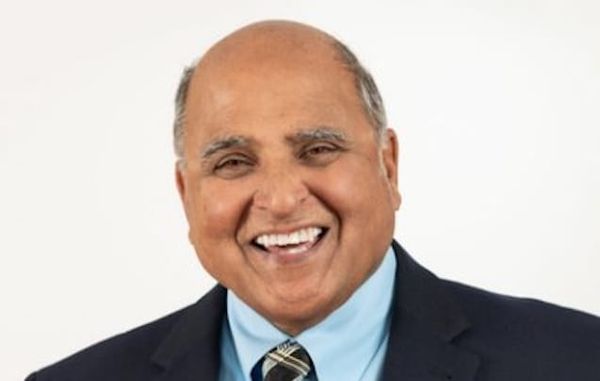
Mohamed Nasir was the longest serving President of the Islamic Foundation of Toronto and one of the pioneers in the development of the Muslim community in Toronto.
Mohamed Nasir was a well-known business leader in Guyana prior to immigrating to Canada.
He was born on the West Coast of Demerara and was one of the young businessmen who launched successful businesses in the capital city of Georgetown in the immerging nation of British Guiana in the 1950’s.
By the early 1960’s, he had established a successful pharmaceutical business which formed part of a chain of family businesses.
While in Guyana, he gained a reputation for being an outspoken advocate for Islam and for supporting community initiatives.
In 1973, he arrived in Toronto and immediately became actively involved in the Jami Mosque and the Islamic Foundation of Toronto.
He spearheaded the establishment of the Islamic Foundation of Toronto Centre, one of the largest Islamic Centers in Canada and a landmark in Scarborough.
He almost single-handedly raised the profile of the organization and of Toronto’s Muslim community with his extensive travels in the Muslim world in the 1980s and 90s, in support of the Islamic Foundation‘s project.
He held the position of President of the Board of Directors of the Islamic Foundation for close to two decades.
He also served as the Vice Chairman of the Board of the Canadian Islamic Trust Foundation, a nationally based foundation serving the Muslim community and as a past member of the Majlis Ash Shura of ISNA, a continental Muslim organization.
He was instrumental in the establishment of the Muslim World League offices in Toronto and the Islamic Society of North America’s headquarters in Canada.
He has served as a mentor and an advisor to a number of other community based organizations and as a resource person on issues of the Muslim community in Canada.
His inclusive nature and universal approach to Islam encouraged active participation of all ethnic and cultural groups, as well as, women and youths in the Islamic Foundation during his term.
In 1993, Mohamed Nasir was recognized by the Canadian government for his community service and philanthropy with the commemorated medal for the 125th Anniversary of Canadian Confederation for making “a significant contribution to Canada, to his community and to fellow Canadians.”
The award stated that “the decoration is a reminder of the values of service, individual respect and community effort on which Canada was built and on which its quality of life will always depend.”
Mohamed Nasir is one of the pioneers of the Canadian Muslim community on whose shoulders we all stand.
(Muneeb Nasir is President of the Olive Tree Foundation (www.olivetreefoundation.ca), a public endowment foundation. He served as a Board of Director of the Islamic Foundation of Toronto in the early 1990s, on a number of committees in the organization from 1974 to 1995 and as Chairman of its Program Committee for many years).