I’m Dreaming of a Green Ramadan

August 8, 2010 by admin  
Filed under Featured, Opinion

Shahr-Mubarak-Green-1By Omar Mahfoudhi

Ramadan is upon us, Alhamdulillah (thanks be to Allah).

We have entered into this blessed month with its many treasures,

Individuals have prepared their dua lists.

Muslim grocers have stocked up with the regular Ramadan delights.

Mosques, centers, and organizations are hosting iftars for the masses.

And groups are planning their nightly devotions at their favourite masjids (mosques).

All are abuzz in this Month of Quran.

Yet, something remains amiss.

The culture surrounding Ramadan, as far back as I can remember, is very much the same attitude many of us hold for most quasi-religious and secular holidays and festivities; materialistic consumerism.

In order to taste the sweetness of Ramadan, it seems we must indulge in the taste of sweets of every kind, from kulfi to baklawa, gulab jamun to knafa.

In this month that is supposed to teach us simplicity and humility, we often lose the very essence of minimalism and conservation.

There are a number of areas in which we can make our Ramadan have the same healing effect on the Earth as it would on our souls.

Here are a few tips to make our Ramadan a little more earth-friendly.

Quran: After all it is the Month of Quran.

Take a few minutes to renew your commitment to the responsibility Allah has entrusted you with; the trust and weight of being managers of this Earth.

Pay heed to verses reminding you of your place on this earth and your duty towards it and its inhabitants, from people to animals, plants to the inanimate: all natural bounties from Allah.

Furthermore, I can’t imagine a better way to implement the command of Allah to ponder His creation than by going out into the natural environment that so abundantly surrounds our city to explore the beauty of Allah’s creation and the might of His design, glory be to Him.

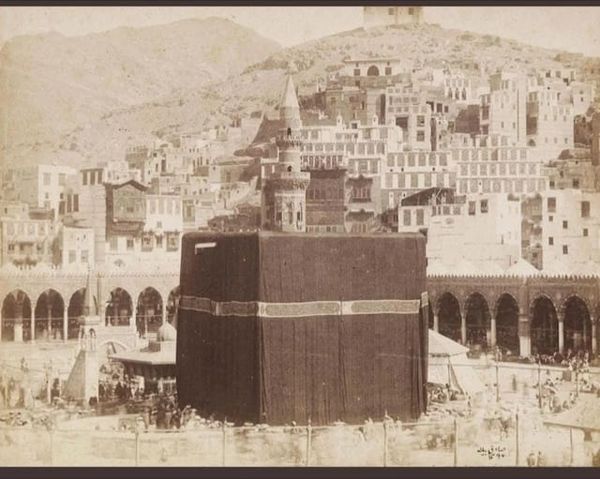
It would be a beautiful habit to develop this Ramadan, that would also be following of a practice of the Prophet Mohammed’s tradition of seeking solitude in the outskirts of Makkah to worship and ponder upon Allah’s miracles.

Take a copy of the Quran with you, and sit on the grass, or under a tree.

You may enjoy your surroundings more without a picnic in tow.

Green Ramadan1

Food: The wonderful ethnic diversity of our community is reflected in the beautiful and colourful array of deserts, and foods on the iftar spread.

This I’m not about to criticize, since I certainly enjoy my occasional laddu (Indian sweet).

I do suggest that we not make Ramadan the Month of Food, but that’s a whole other discussion.

What I’m proposing is to try to use local ingredients in your embarrassingly named “Ramadan Recipes”.

Instead of using imported chickpea flour, use local produce.

Instead of imported –and incredibly expensive– dairy products, consider Ontario dairy.

This will help reduce your ecological footprint, and, insha Allah (God willing), with the proper intention perhaps help you increase your foot print in Jannah (paradise).

Water: The same applies to our use of water.

We could do with the revival of some of the forgotten sunnan (traditions) of the Prophet, may peace and blessings be upon him, such as the use of very little water in our ablution.

Consider the reminder the Beloved of Allah, may peace be upon him, gave his companion to conserve water even if at a flowing river.

I believe that advice is particularly appropriate for Canadians who have one of the most abundant freshwater resources at our hands.

Green Ramadan2

Waste: Quite frankly a very pressing concern associated with modern Ramadan traditions is waste.

Whether it be wasting the food we can’t finish on our plates, or the waste generated from using disposable plates, cutlery, and cups.

This must stop.

It is an illness that plagues our Ramadans.

The entire month should be reminding us of the plight and distress of others, except that when that daily opportunity to ward off hunger arrives, it’s as if we forgot all about it, and are feasting with our eyes.

Again, lets not make this the Month of Wasting Food.

Furthermore, with all the iftars around town and the huge numbers of people in i’tikaf (spiritual retreat) in the mosques, imagine the amount of waste produced from disposable plates, cups and cutlery, not to mention the enormous pile of PETE water bottles.

I don’t imagine it would be very difficult for mosques to invest in reusable plates and cutlery.

We did it at our MSA at the University of Ottawa, and we all pitched in cleaning up afterwards.

In fact, this investment may save them a lot of money in the long run.

You can even rent dinnerware froim your favourite party store at less than $0.50 per dozen, and they will handle the cleaning.

Also, all you brothers and sisters heading to the mosques should take reusable bottles for water.

Think about how much easier that would be than constantly running back and forth to the water cooler, waiting in line, and then hunching over a fountain that barely produces enough water to keep its pipes moist.

Green Ramadan3Energy: While devoting our nights to prayer, and our days in the remembrance of Allah and the study of the Quran we needn’t help the fat cats at the energy company milk more money out of our mosques, schools and centers.

Use the light of the Sun shining through the windows to read the Quran and try praying in the dark or at least in low light.

You would be surprised what that can do for you in terms of increased tranquility and concentration (khushou’).

Praying in the dark can increase your sense of privacy with your Creator.

Maybe this Ramadan climate change watchers may see a dent in emissions because Muslims around the world have lowered their energy use.

I can dream, can’t I?

Perhaps, with these tips we may not only be able to give our bodies a rest from all the food, as well as the toxins we inadvertently consume, we may give our Mother Earth the rest she well deserves from all the toxic, hurtful, wasteful habits we’ve plagued her with.

This way she may leave us with more places to pray upon that will vouch for us on the Day of Recompense.

*Omar Mahfoudhi has a Bachelor’s degree in Environmental Sciences from the University of Ottawa. He is known amongst friends and colleagues as Green Kufi because of the green prayer cap he often sports and because he’s a Muslim Environmentalist.

Originally published in the August 2009 issue of the Ottawa newspaper, Muslim Link (Muslimlink.ca).

Environmentally-friendly Practices in Ramadan, a Religious Duty

August 30, 2009 by admin  
Filed under Featured, Life

eco-friendly_img2By Hind Al-Abadleh

(AUGUST 30, 2009) – Every year, Muslims around the world observe the fasting in the month of Ramadan (9th month in the Islamic calendar) as it is one of the five pillars of the religion of Islam.

Numerous articles have been written on the relative magnitude of reward that a believer would receive for all acts of worship, charity and kindness done in this month relative to other months, provided that these acts are performed with the proper and sincere intention of pleasing God alone.

One of the famous sayings of Prophet Muhammad (PBUH) is narrated by Abu Huraira, in which he said, “Allah said, ‘All the deeds of Adam’s sons (people) are for them, except fasting which is for Me, and I will give the reward for it.’ (Bukhari Volume 3, Book 31, Number 128).

Muslims recognize that to qualify for the best reward from God in this holly month, observing the fasting in Ramadan cannot be as mechanical as abstaining from eating and drinking.

The Prophetic traditions are full of examples on how little acts with negative impacts on surroundings and people’s feelings, or acts done with impure intentions result in disqualifying a Muslim for the reward of fasting, even if he or she has stopped eating and drinking during the day.

With that in mind, I believe that taking the time during Ramadan to remember and act upon our obligation as people of faith toward the environment we live in is as important as all other extra acts of worship we perform enthusiastically and exclusively in Ramadan.

One example of responsible behaviour towards the environment is waste reduction and recycling.

These two environmentally-friendly practices are most relevant to community iftars (i.e. meal to break the fast) and potlucks that take place on a daily or weekly basis in many mosques and Islamic centres across the country.

The Muslim community in Canada is blessed by the abundance of clean food and safe water, and the diversity of this community is reflected in the numerous cultural cuisines that one would clearly see when attending such community gatherings.

Yet, how many times are we shocked by the amount of food that people help themselves to on a single plate to find out later that most of it ended up in the trash bin?

Any person with conscience would be astonished from such a scene because it’s happening during a month when we strive to be better Muslims and citizens, and also at a time when food banks are constantly encouraging donations to serve the poor and the homeless.

I think we need an attitude shift while approaching the food table in any community iftar from that of “I’m so ready to eat now after 12+ hours of fasting” to “I’m only taking this amount and I’ll eat it all”.

We also have to be aware that children are around us in these gatherings who are keen observers of how adults behave socially.

After all, everyone goes home later where one is careful not to throw food in the garbage, and discourage their kids from doing so.

As responsible Muslim adults, we have to lead by example, and not only by lecturing and warning of God’s punishment for the wasteful.

In other words, our understanding of the following Qur’anic verses needs to be put into practice: “Eat and drink the sustenance God has provided and do not cause corruption in the land” (Quran 2:60, ref. 1), and “They (the servants of the Lord of Mercy) are those who are neither wasteful nor niggardly when they spend, but keep to a just balance” (Qur’an 25:67, ref. 1)

Also, most municipalities across the country have implemented recycling programs.

The larger Canadian community is increasingly adopting environmentally-friendly practices, and Muslims should be no exception.

For Muslims in particular, recycling should be regarded as the indirect way of avoiding the exploitation of natural resources as we’re ordered to in this verse: “Do not cause corruption (fasad) in the land” (Quran 2:11, ref. 1).

The interpretation of the word fasad encompasses creating imbalances in the natural world due to human consumption (ref. 2).

Hence, recycling the plastic and styro-foam cutlery used in community iftars should be a priority for each responsible adult Muslim.

We all should encourage the management of mosques and Islamic centres to adopt effective recycling programs during Ramadan and beyond.

According to the 2008 Greening Sacred Spaces report published online by Faith and the Common Good (ref. 3), the Islamic Foundation of Toronto switched to using biodegradable cutlery at events.

I was present at an iftar program held last year at the International Muslims Organization of Toronto where school-age volunteers were present at multiple recycling bins and asked people to separate food for composting and throw plastic and styro-foam in separate bins.

One also should emphasize here that such positive practices of civilized and responsible believers would be noticed by our non-Muslim friends whom we invite to come along to such gatherings.

In conclusion, I pray that the spirit of Ramadan would be a positive force for change in all of us at the personal and communal levels. Ameen.

References and Useful resources:

1- M.A.S. Abdel Haleem, The Qur’an: A new translation, Oxford University Press, 2nd ed., 2005.

2- Water Management in Islam, http://www.idrc.ca/openebooks/924-0/

3- Greening in Faith Communities, Case Studies on Ten Community Profiles. Greening Sacred Spaces 2008, http://www.faith-commongood.net/

4- website of the UK-based Islamic Foundation for Ecology and Environmental Sciences (www.ifees.org), which regularly publishes periodicals on the relationship between the teachings of Islam and environmentally-friendly practices.

Dr. Hind Al-Abadleh is an Assistant Professor of Chemistry at Wilfrid Laurier University, and teaches courses on environmental chemistry. She is interested in studying how religion can motivate people of faith to changing their practices to more environmentally-friendly ones. She could be reached at halabadleh@wlu.ca