Jewish interfaith leaders urge Shabbat sermon about Islam
(September 8, 2010) – A group of U.S. Jewish interfaith educators is asking rabbis to talk about Islam next Shabbat.
A letter signed by six prominent rabbis and scholars points out that Shabbat Shuvah, the Sabbath between Rosh Hashanah and Yom Kippur, falls on Sept. 11, the ninth anniversary of the terrorist attacks on the World Trade Center and the Pentagon.
In light of the controversy over the Islamic center planned near the New York site, the letter asks rabbis and rabbinical students to “speak out against the bigotry that has erupted,” and promote the ideals of religious freedoms for Muslims as well as Jews.
Rabbis in leading positions at the Reform, Reconstructionist and Conservative seminaries, as well as the rabbinical school at Hebrew College, signed the appeal.
It reads, in part: “In addition to memorializing the innocent victims of September 11th, we ask that time be dedicated to conversation about our own fears and prejudices, on the need to educate ourselves about Islam.. and on the role Jews might play in helping to create a more inclusive and just society.”
More information on the campaign is available at multifaithworld.com.
Emergency meeting of top Faith Leaders addresses anti-Muslim fear, intolerance
(Washington, D.C. Sept 7, 2010) – The Islamic Society of North America (ISNA) hosted an emergency interfaith summit today to address the recent surge in anti-Muslim rhetoric and Islamaphobia.
Directly following the interfaith summit held in Washington D.C., members in attendance held a press conference and issued a joint statement to the public regarding unified action for faith communities to promote tolerance and combat anti-Muslim rhetoric, hate crimes, and Islamophobia.
The press conference, telecast live on CNN and CSPAN, included statements from members of the Jewish, Muslim, and Christian faiths to discuss the critical need for members of all faiths to protect the safety and civil rights of Muslims. A member of the interfaith summit stated, “Hate is neither a religious nor democratic value.”
In an excerpt from the interfaith statement issued at today’s press conference, the faith leaders stated: “Religious leaders denounce anti-Muslim bigotry and call for respect for America’s tradition of religious liberty. As religious leaders in this great country we have come together in our nation’s capitol to denounce categorically the derision, misinformation and outright bigotry being directed to the American Muslim community. We bear a sacred responsibility to honor America’s very favorite traditions and to promote a culture of mutual respect in assurance of religious freedom for all. In advance of the ninth anniversary of September 11 attacks, we announce a new era of interfaith cooperation…silence, silence, silence is not an option.”
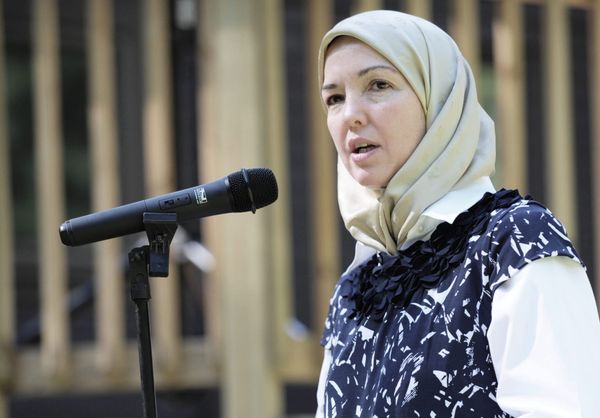
The press conference spanned topics ranging from the role of ISNA and the interfaith community in protecting civil rights, the growth of the Muslim community, to the proposed Quran burning in Florida, to which ISNA President Dr. Ingrid Mattson called all Muslims to exercise the principles of Islam and this Ramadan of patience and remember that “although we are upset, we are alarmed, (by the acts of Quran burnings), our community should feel confident that God’s eternal words will live on. The Quran will not disappear with the burning of a book because millions of Muslims hold it in their hearts.”
To view the entire statement of interfaith action issued today at the summit, please click here. To watch the entire press conference from today, please click here.
Toronto youths fight hunger, feed hope this Ramadhan
(September 7, 2010) – In 1998, a group of Toronto Muslim youths wondered how less fortunate Muslims in their own backyard would sustain themselves during the month of Ramadhan.
A few months later, the youths started the Ramadhan Campaign Against Hunger (RCAH) out of the Ja’ffari Islamic Centre.
“That year they organized and motivated the community to dig in their heels, roll up their sleeves and help 50 of the most GTA’s most unfortunate Muslim families to have a Ramadhan to remember,” Raheel Jiwan, RCAH Director told IQRA.
Twelve years later, the RCAH initiative has grown into a large campaign that raises donations in the five figures and delivers food items such as rice, flour and oil, as well as a $150 gift card for groceries, to 500 families from Ajax to Brampton and across the region.
“Today we are one of the largest Muslim food drives in North America catering to over 500 families across the GTA using a $200,000 budget, all derived from donations,” said Jiwan.
The campaign raises donations through local mosques, Facebook and its members
Recipients of the gift packages are referred to the campaign organizers by social workers and community members. They must have been a client of regular food banks or lived in shelters in the past year.

This year, RCAH also introduced the ‘Catch A Falling Star Campaign.’ This campaign allows donors to ‘Catch’ and sponsor a family before they ‘Fall’ into the bleakness of hunger and poverty during the month of Ramadhan.
“Once you Catch your Star you will be provided details on your Star such as genders and ages of family members, specific ‘wish items’, etc, to give you a chance to make it an activity for your own family by allowing you to personalize your Stars’ delivery hamper with any gifts or items that you may wish to donate,” states RCAH website.
For further information about the Ramadhan Campaign Against Hunger see here
Difficult week ahead for American Muslims
(September 6, 2010) – American Muslims are bracing for a difficult week as a Florida-based church still plans to burn copies of the Qur’an on Saturday to commemorate the September 11, 2001 attacks on the World Trade Centre.
Far from Ground Zero, where debate over a proposed Islamic center is still heated, the plan of the Gainesville church comes at a time when Muslims are set to celebrate Eid-ul-Fitr, marking the end of Ramadan.
Across the nation, religious leaders and groups are expressing deep concern in response to the announcement of the church, the Dove World Outreach Center.
The Miami Herald reports that last week, 20 Jewish, Christian and Muslim clergy gathered on the steps of Gainsville City Hall to denounce the nondenominational Dove church, whose 50 members regularly parade through the University of Florida campus with T-shirts and signs in red ink declaring “Islam is of the devil.”
The Herald is also reporting that some Muslims are leaving town on September 11 to avoid problems.
The American Muslim Association of North America (AMANA) is calling on all Muslims in and outside the U.S. not to use any form of violence against the Dove World Church.
AMANA, in a statement, is calling for restraint.
“We would like to remind that Islam calls for vigorous condemnation of such hateful acts, but always within the margins of law and order. It is of the utmost importance that we react, not out of emotion, but according to our religion. It was God Almighty, who said in the Holy Qur’an, “Good and evil are not the same. React to your enemy with what is better so that your enemy may become your good friend.” (41:34) The consensus of our scholars teach us that this verse means that we should use forbearance, wisdom and a good standard of character to all non-violent provocations.”
In Houston, about 120 people attended a symposium at the Baitus Samee Mosque, and heard speakers from Hindu, Buddhist, Jewish, Sikh, Zoroastrian, Christian and Muslim clergy discuss the sanctity of religious books, The Houston Chronicle reported.
“Even if it is a human document merely inspired by encounters of the divine, or generations of my people’s wisdom passed down and kept sacred, it is still sacred,” Rabbi Jonathan Siger told the Houston audience.
Meanwhile, in response to the controversy surrounding the Park 51 Project in New York, a Coalition of African American Muslims has been formed.
In a statement, the Coalition affirms that, “As African-American Muslims, we feel our unique perspective has been missing from an emerging national discussion. We wish to join that discussion by first of all affirming that among our forbears are Muslims who have lived peacefully and productively in this country since its inception. They, and others among our people have sacrificed too much, both in enduring the horrors and brutalities of chattel slavery, and during the long march to freedom, civil and human rights for us to silently accept a return to Jim Crow exclusionary practices and policies that relegate either ourselves or our co-religionists from other ethnic backgrounds to second-class citizenry.”
“Ultimately, our success as a nation of diverse people will hinge on our ability to move beyond the limitations that our unique identities sometimes impose on us and claim the loftiest principles rooted in our common humanity,” the Coalition members added.
Take me out of your box, for humanity’s sake
By Sara Khan
Travelling alone as a Muslim Pakistani female hasn’t been all that easy in a post-9/11 world. In fact, being “Muslim”, “Pakistani” and a “woman” simultaneously can be too many red flags attached to one identity.
While pursuing my education abroad I had many experiences dealing with airport security and immigration staff – particularly during my travels between Costa Rica, the United States and Pakistan. But I also learned through these experiences that sometimes a little act of kindness can go a long way in transforming our view of the “other”, helping us to realise and appreciate the inherent good in people.
In my mind I had put airport authorities everywhere in a box labelled “Ruthless-officials-securing-their-country”. And the box they might have had for me was, well, “She-must-be-up-to-something”. My interaction at the airport served as a microcosm of the larger Muslim-Western relationship, rife with stereotyped ideas and deeply held, hardly questioned beliefs about the other, further polarising the two groups.
My box guided my behaviour in front of airport security officials. This meant no extra talking, only brief answers, doing what they said and praying in my heart to come out of the question-and-answer session alive and kicking, and not detained somewhere in Guantanamo. Though this box helped me control my behaviour for the situation at hand, deep down I developed bitterness, fear, mistrust and anxiety of entering any country other than my own, especially a Western one.
It also compelled me to judge security officials I came across during my international travels in a negative way – as the “other”.
There was one particular occasion that at first bolstered this sentiment. I was waiting for a flight to Pakistan with a ten-hour transit in a UK airport. My hand luggage included nothing extraordinary except for a very unusual umbrella that a friend had given me during a visit to the Harvard Art Museum in Massachusetts.
A professor at Harvard, this friend showed me the university and bought me an umbrella with an image of Harvard and the Charles River painted on it. That umbrella signified her kind friendship, love and belief in me. To me, it was not just an umbrella, but a connection to the world of knowledge that I admired and wanted to immerse myself in.
Afraid that I might lose it, I kept the umbrella as part of my carry-on. Though it passed through all the security checks in the United States, it was declared a “security risk” in the UK. Security officials asked me to throw it away before boarding the plane to Pakistan.
Bewildered by the seemingly random changes in security standards between airports, I tried in vain to argue. But I was not allowed to board the plane with the umbrella, and had to throw it away.
As I walked away, wiping my tears, I heard a security official yell out: “Excuse me, Ma’am! I have a solution!”
He took the umbrella out of the trash, a Swiss Army knife out of his pocket and started cutting the ribs and stretchers off the canopy of the umbrella. He meticulously removed the canopy off the shaft of umbrella, neatly folded it and handed it over to me with a smile: “Now you can take this,” he said. “Please get it remade once you are back home.”
I certainly did not expect this kind of action from a white British security official. His act of kindness did not fit in the box I had created for him. I had cast him as the “other”. But he proved otherwise.
No matter how hard we try, today’s circumstances push us to box, stereotype, categorise and judge individuals or groups who are different from us. In recent times stereotyping has become the most comfortable response mechanism while dealing with security issues, both for Muslims as well as Westerners. Such stereotyping widens the gap that exists between Muslim and Western worlds. It limits both groups’ ability to allow for individuality and critical judgment when faced with challenging situations, generating further mistrust.
This incident helped me realise that there are moments and spaces in which our individual actions can alter the stereotypes that we carry for one other. The action that I witnessed left an indelible impression on me, and a renewed belief in the inherent goodness of human beings. Individual actions that go beyond stereotypes might not be a panacea to problems that exist between the Muslim and Western worlds, but they are a step toward better understanding and harmony.
###
* Sara Khan is Media Manager at Search for Common Ground-Pakistan. This article was written for the Common Ground News Service (CGNews).
Toronto Mosque to distribute food baskets to mark end of Ramadan
(Toronto, ON) – Scadding Court Community Centre and Masjid Toronto will be continuing their successful project to educate the general public about Islam and Muslims by distributing packages of food to celebrate Eid to residents in a low-income neighborhood.
Scadding Court serves the Alexandra Park community which is composed of Atkinson Housing Co-operative and two Toronto Community Housing buildings where the majority of residents live on a fixed income.
The Eid packages will include food supplies and a brochure about Eid, Ramadan and Hajj, translated into three languages (Chinese, Vietnamese and Bengali).
Last year, over 1,000 packages of food were distributed by 150 volunteers in one night.
On Wednesday, September 8, volunteers will meet at Alexandra Park Community Centre to assemble and distribute the Eid packages.
Let’s promote the very essence of who we are in Canada
By Fred A. Reed
The arrest of two Ottawa men, followed shortly by two others, on terrorism-related charges has drawn anguished reactions from Canada’s beleaguered Muslim community. The country’s main Islamic organizations rushed to condemn terrorism and restate Islam’s prohibition of the taking of innocent lives. They also insisted on the state’s obligation to provide the accused with a fair trial.
Though timely, the warning is unlikely to be heard. A trial in the court of public opinion is already underway.
Public knowledge of the case is thus far limited to police statements, as well as to interviews with “terrorism experts” who appear deeply knowledgeable about the Ottawa men’s intentions. Hard on the arrests, Public Safety Minister Vic Toews used the term “homegrown terrorism.” CSIS Director Richard Fadden described the men’s alleged intentions as “domestic radicalization” whose practitioners are “rejecting the very essence of who we are in Canada.”
The homegrown terrorism that the Ottawa men are claimed to represent has supposedly been nurtured by a sophisticated internet-based campaign that depicts military action in Iraq and Afghanistan as part of the West’s war against Islam, targeted at impressionable young web surfers.
Adding insult to injury, former CSIS Director Reid Morden linked the suspects to fundamentalist views being propounded in newly established Canadian mosques.
Thus within two days, arrests, charges and a skein of allegations have successfully framed the case as one of Canadian values under attack from radicalized homegrown would-be terrorists. Officials wonder aloud about balancing the safety of the state with individual freedoms.
Self-described security experts with shadowy links to the police claim the men were planning to carry out bomb attacks in Ottawa and Montréal. At the same time, circuit boards confiscated by police were, they said, designed to detonate roadside bombs of the kind used with devastating effectiveness in Iraq and Afghanistan.
Thus far, however, few have raised questions about the men’s possible motives.
Might they, I find myself wondering, be justified in reacting—desperately—to what any normal citizen would rightly view as the illegal invasion and occupation of a Muslim country? Might they be frustrated by the hypocrisy that disguises the “Canadian mission” in Afghanistan as a humanitarian endeavor to protect women’s rights and promote education?
Could they, like many non-Muslim Canadians, have experienced feelings of anger at the sight of white men with guns patrolling the streets of dirt-poor Afghan villages? Of high-salaried NGOs handing out candy by day to the children who may well be bombed into oblivion by a US drone strike by night? Or to the spectacle of high Canadian officials hobnobbing with the drug lords of the puppet Karzai government?
Could they possibly have concluded, as have several non-Muslim commentators, that US-led invasions of Iraq and Afghanistan were indeed acts of war against sovereign Muslim countries? Could they possibly have been swayed not by inflammatory jihadist websites, but by something more elemental, a sense of solidarity with the victims?
In the Canadian context, they would not be alone.
Quebeckers, who remember RCMP provocateurs masquerading as FLQ terrorists, the role of the Trudeau government in proclaiming the War Measures Act of October 1970, and the subsequent occupation of Montreal by the Canadian army, have been unwavering in their rejection of Canada’s role as occupying power in Afghanistan. They demonstrated in the hundreds of thousands against the American invasion of Iraq, and have taken massively to the streets to protest Israeli aggression in Lebanon and Palestine.
Of course, Canadians with long memories will recall the volunteers of the MacKenzie-Papineau Battalion who traveled illegally to Spain in 1937 to join the fight against fascism.
Muslim organizations in Canada and Quebec could lend further credence to their plea for equal treatment of Muslims by condemning the use of Canadian troops as collaborators in the illegal occupation of a poverty-stricken Muslim country, and suggest ways for young Canadian Muslims to join their voices with those of their fellow citizens in opposing by political means the state terrorism of the Western coalition of which their country is a part.
That would be promoting the very essence of who we are in Canada.
*Fred A. Reed is a journalist, literary translator and author (Anatolia Junction, Shattered Images, Conversations in Tehran). He lives and works in Montreal.
Our survival depends on indigenous knowledge
By Alvin Manitopyes
Traditional knowledge is very powerful. This knowledge is our birthright. It was given to our people when we were placed here on Mother Earth with sacred instructions on how to live as caretakers of Mother Earth. But if it is not used and shared, then it becomes useless.
My uncle used to say the transmission of traditional knowledge is a sacred process. There is a protocol to it: Presenting tobacco, having the elders speak, listening carefully while they shared teachings and history and stories. That’s how we learned.
He said it’s up to each of us to decide whether or not we use that knowledge for the benefit of our families and for our people. He warned that if we don’t take responsibility as fathers, mothers, parents, grandparents to learn and live according to that knowledge, it’s like we’re running away from the Creator.
Today, our people are suffering from disease and alcoholism, and it has become a war. The greatest battles are against alcohol, drugs and addictions. Our greatest ally is our culture and spirituality, because that’s what gives us strength and keeps us healthy.
The teachings are not only important for the benefit of our people and communities, they are reaching all the citizens of the world. People around the world are starting to recognize that traditional indigenous knowledge has many lessons that can be shared so that all can benefit. That’s in fulfillment of one of our prophecies that a time will come when the world will turn to indigenous peoples and ask, what can you teach us? This is why traditional knowledge is very crucial.
The traditional belief of my people is that Creator placed us here as the Original Peoples of North America to be caretakers of Turtle Island by living under the natural laws of this creation. Each indigenous nation was given original instructions about upholding natural laws, and we understand that our very existence is an expression of the Creator’s love.
The laws of the Creator are written in nature, and these great laws instructed us to live in peace and harmony with all forms of life, with all humanity. Our Mother Earth is a source of all life, whether it be plants, crawlers, four-legged, winged-ones, or human beings. If we listen, observe and respect her, she will continue to provide sustenance, and recycle the food and medicine we consume, and make them available to her children and grandchildren.
Like Mother Earth, women are the givers of life and must be respected. Indian people believe that all women are sacred, that all women symbolize Mother Earth. Traditionally, there was no competition between gender in indigenous societies, as men and women understood their roles based on balance between genders. This is one of the many teachings we can teach the world.
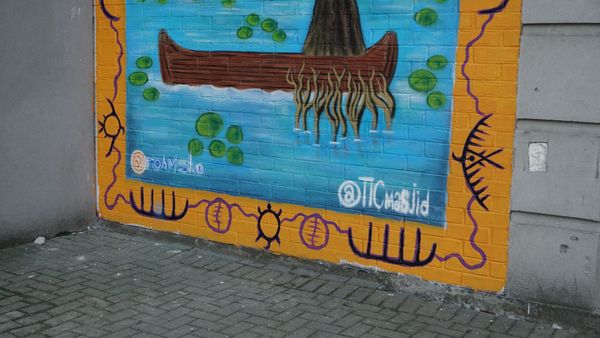
Trees can teach us valuable lessons if we look closely. According to the Cree, the pine tree symbolizes the Creator, as the branches look like a man holding his hands up to the heavens praying to the Creator. This is the ancient way of praying amongst my people.
The spruce tree is a tree that symbolizes Mother Earth as the branches spread outright, like a woman embracing the Earth. Like people, some trees are strong and straight, symbolizing truthfulness and honesty, and others are crooked, representing dishonesty. Some trees like willows are flexible, like people who are open-minded to change.
Oak trees are rigid and deep-rooted, and some people display these characteristics. Some smaller trees are overshadowed by bigger trees as they struggle to benefit from the warmth and life-giving force of the sun. The trees in the forest reach out to one another with their branches symbolizing a happy, healthy community. Humans can learn about unity and brotherhood from trees.
When my people transplant a tree to the center of the Sundance lodge, this tree symbolizes the great spiritual transformation that people can change their hearts and their lives to live as the Creator intended. We strive to be like that tree, which knows no sin. When we witness the wonder and diversity of Mother Earth, we also learn to witness the beauty, wonder and diversity of the children of Mother Earth and the Creator.
The great plan of the Creator is for all human beings to experience the sacred energy of Mother Earth, to walk upon her in a sacred manner. Creator planted a spirit into every form of life so that we could learn her great natural laws.

Alvin Manitopyes, Muskowkwan First Nation and Grandmother Doreen Spence, Executive Director for the Canadian Indigenous Women’s Resource Institute
Today, we are witnessing how far mankind has strayed from the original instructions. This is why we are living in a world that is out of balance.
There are signs in nature that signal this world is out of balance, such as global warming which causes unpredictable weather and natural disasters. The sacred blanket in the sky that covers Mother Earth is weakening, causing natural calamities which threaten food security. Even the birds are getting confused with their migration patterns, as we have geese returning in the middle of winter.
As an Indian man, I do my best to teach my grandchildren the ancient knowledge that our connection to Mother Earth is an energy that flows through our veins. We carry the truth of this beautiful land in our hearts. It is important for Indian children to understand that the Earth is our mother whom we must treat with utmost respect and honor. Like our ancestors, our children will realize that the Earth does not belong to us, that we belong to the Earth. They will learn to take only what is needed, and give back a little to acknowledge the spirit of the life form that gives them life.
Indigenous elders were given the responsibility to guide the younger generations into the future, and they are concerned that indigenous knowledge is at risk of being forgotten.
Elders are asking parents to consider the negative influences of this world such as drugs, alcohol, gangs, rap music, and wearing clothing with skulls which attracts dark, evil forces. Our children must be taught that all people are under obligation to protect their spirits from negative energy, and the ultimate authority is the Creator.
It’s very important that we teach our children to take responsibility to carry on our role as caretakers of Mother Earth, and to live in harmony with themselves, with their families, their communities, with the larger world.
It’s important that our oral tradition with our languages be brought back to be restored amongst the people, for that’s our very connection to the spirit world. We must always remember traditional knowledge is the very strength of our identity as indigenous peoples.
*Alvin Manitopyes is an enrolled citizen of the Muskowekwan First Nation and is also of Plains Cree and Anishnawbe ancestry. He works with organizations that focus on youth, wellness and environment, and is a consultant for the Public Health Agency of Canada.
*The article is an excerpt from the first International Roundtable Supporting Ancient Indigenous Knowledge that was held at the Turtle Lodge on the Sagkeeng First Nation in Manitoba in early summer. Traditional healers, elders and spiritual leaders from around the world attended to share knowledge and encourage respect for traditional teachings.
Condemnation and concern from Canada’s Muslims following arrests
(August 27, 2010) – Shock and concern are being expressed by Canadian Muslims following the arrests in Ottawa and London of three men on terror-related charges.
Hiva Mohammad Alizadeh, 30, Misbahuddin Ahmed, 26, and Khurram Syed Sher, 28, have been charged in connection with an alleged terrorist plot.
“We stand united with all our fellow Canadians against all criminal acts and in the ongoing efforts to safeguard the security and well-being of our nation,” stated Salam Elmenyawi, President of The Muslim Council of Montreal (MCM).
The Canadian Council on American-Islamic Relations (CAIR-CAN) said, in a statement, that Canadian Muslims are unequivocally committed to public safety and national security.
“Canadian Muslims have categorically and repeatedly condemned terrorism in all of its forms and will continue to do so. We are committed to ensuring the safety of our country and fellow citizens and reaffirm that terrorism is inconsistent with core Islamic principles that include justice, the sanctity of life, mercy and compassion.”
Community leaders are also expressing concern over a possible backlash against Muslims as a result of the arrests.
“We further ask the RCMP, CSIS and the Ontario Police Department to set an example for the nation in exhibiting sensitivity towards the Canadian Muslim community,” said Salam Elmenyawi of the Muslim Council of Montreal (MCM).
“The accused and the case should be described in an accurate and balanced manner, avoiding exaggeration, judgment and rhetoric that may be used in a negative way against the community,” he added.
Meanwhile, Ottawa’s Muslim leaders met with the RCMP and police Thursday evening to seek assurance their community was not regarded with suspicion following the arrests.
“The meeting helps build trust between law enforcement authorities and the community to make sure we can stamp out radicalization (within the Muslim community),” Bader Siddiqi, former president of the Ottawa Muslim Association, told the Ottawa Citizen.
There is sense of devastation and confusion among Muslims following the arrests, writes Aisha Sherazi, an Ottawa freelance writer, in a commentary in today’s Ottawa Citizen.
“As confused and hurt as the general public is that there may be such people living among them, the Muslim community, too, is confused and hurt. When the news broke out, I found myself wondering, could it be possible that I have ever seen these men? Ever spoken to them? Ever spoken to their wives? Do my children play with their children at community events?” Sherazi wrote.
“One is left feeling bewildered. Do I really know anyone? Perhaps worse still, there is the feeling that others may feel they don’t know you.”
Ramadan around the world: Lebanon, Indonesia and Guinea
By Juliette Schmidt
Last week I began a virtual tour of Ramadan around the world, inspired by the stories of my Moroccan, Pakistani and US-based colleagues at Search for Common Ground, a non-profit conflict transformation organisation. This week, as even Toronto buzzes with invitations to fast-breaking iftardinners, I look to Lebanon, Indonesia and Guinea.
Nour Awaiss, French and Arabic Editor for the Common Ground News Service, reflects on her experience as a Christian in Lebanon during the month when many of her Muslim compatriots fast, and draws parallels to the atmosphere surrounding Christian holidays: the family reunions of Christmas, the joy of children on Palm Sunday and honouring the dead on All Saints’ Day.
She notes a similarity to family meals at Christmas: “The celebration at the end of Ramadan, Eid ul-Fitr, is an opportunity for the entire family to take part in a festive meal in their family’s village after the morning prayer marking the end of Ramadan.” Another Lebanese colleague, Ali Dahwich, Finance and Administrative Officer, explains, “I will go to Tyre, my hometown in the south, to share lunch with my family. Thirty cousins, uncles and aunts will gather around plates of stuffed mutton and mechoui(barbeque).”
Just like in the days preceding Palm Sunday, which marks Jesus’ arrival in Jerusalem and is celebrated a week before Easter, “in the lead up to Eid ul-Fitr, the holiday marking the end of Ramadan, clothing stores are crowded and amusement parks are full of children of all ages. In their new clothes, they are swept away by the magic of this sacred time.”
Much in the way that Catholics in some parts of the world commemorate the dead on All Saints’ Day, in the early morning of Eid, “some Muslim families gather at the graves of deceased family members to read the Fatiha prayer (the first chapter of the Qur’an) in memory of their ancestors,” Awaiss adds.
In Lebanon, the religious holidays of all the major religious communities in the country are state holidays for everyone. “Life is good in Lebanon,” concludes Awaiss, “on all its holy days.”
Ramadan also impacts business, something that is acutely felt in Indonesia.
Agung Yudhawiranata, Programme Coordinator and Bahasa Indonesia Editor, explains: “Because of the change in peoples’ schedules, there is an effect on business. Restaurants and entertainment establishments reduce their hours of operation or cover their windows with black cloth during the day; lunch meetings are replaced with buka puasa (breaking the fast, or iftar) dinners. But first, people endure the heavy traffic jams minutes before sunset as everyone rushes home to break the fast with their families.”
Accommodating this Ramadan schedule, “many businesses or government offices organise special evening events for colleagues, clients and employees and their families. Much business is conducted and many relationships are reaffirmed at buka puasa gatherings.”
In addition to heavier traffic in Jakarta’s already slow-moving streets, Ramadan can bring other challenges. According to Yudhawiranata, “By some weird phenomenon of economics, the prices of staple foods magically take a sharp hike. This has been challenging for some Indonesians who, following steep electricity tariff hikes in July, cannot afford these items to feed their families.”
In the West African country of Guinea, many of the cultural and spiritual aspects of Ramadan mirror those in other countries, but are also shaped by its unique context.
Safiata Barry, Administrative and Finance Assistant in the Guinea office explains, “Here in Guinea, Ramadan is a very special month when we pray, fast and spend time with our loved ones. As in other Muslim countries, we fast during the day until the evening prayer after sunset.”
“After prayer,” she continues, “family and friends come together to break the fast. Traditionally, we eat rice prepared with chicken, meat or fish mixed with vegetables, fonio (a popular West African grain) and porridge. Afterwards, we sit and chat or watch television – if there is electricity.”
Barry explains that in Guinea, “During Ramadan, men also send money and cola fruit to their in-laws, as a sign of respect.”
But like most of my colleagues taking part in Ramadan, Barry highlights that this month means much more than the fasting, feasting and gifts: “Ramadan is a time when I reflect on those who are less fortunate. I can really feel what it is like to experience hunger, and can sympathise with those who live without food on a daily basis.”
###
* Juliette Schmidt is Assistant Director of the Muslim-Western relations programme at Search for Common Ground. This article was written for the Common Ground News Service (CGNews).