A developing Islamic University in Rotterdam

June 30, 2010 by admin  
Filed under Featured, News

By Jan Felix Engelhardt

Tural Koç is feeling rather pleased with himself. The administrative head of the Islamic University of Rotterdam (IUR) has just taken a major step towards gaining state approval for his university. Following close consideration of content and formal requirements, the Dutch accreditation authority has now granted official recognition to the first IUR course.

Students taking the Masters programme in “Islamic Spiritual Counselling” are now able to qualify with a state-recognised degree. This, Koç believes, shows that the university is well on its way to fulfilling its aim of creating a Muslim academic elite in the Netherlands.

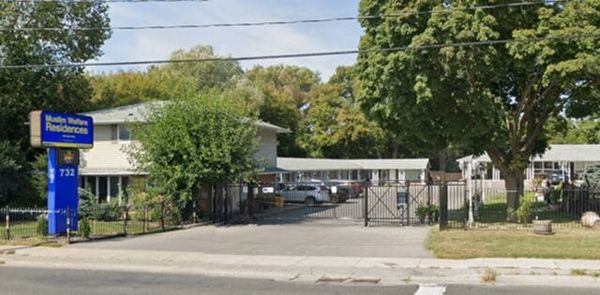
It is a goal that the Islamic University has been pursuing since taking up residence in the centre of Rotterdam in 2003. Its close proximity to a Reformed church and a Catholic church is a reminder that educational, health and social institutions were traditionally organised according to confession in the Netherlands.

“We are working on integrating a Muslim element into the Dutch social structure,” explains Koç. The IUR is intended as part of this process. And whether or not the school can be part of the process in the long term depends very much on official recognition.

In order to achieve this, those involved with the Islamic University are pulling out all the stops in their interactions with other institutions dealing with integration issues. Together, they organise events to promote interfaith dialogue, celebrate the end of Ramadan, arrange conferences on tolerance in Islam and maintain close contact with representatives from churches and the government. The motivating force behind all of this action is university principal Professor Ahmed Akgündüz. The 55-year-old who has taught in both Turkish and American universities in the field of Islamic law is an influential figure whose views carry considerable weight.

The IUR is intended to be a university that is run by Muslims and for Muslims. Founded in 1997, it currently has around 200 students. The courses, taught in Dutch and Arabic, include Islamic theology, Islamic arts, Muslim spiritual counselling, Arabic, law, the history of Islam and comparative religion.

In addition to housing a library that includes an extensive collection of classical works on Islamic theology and law, the university also has a small studio where calligraphy and ebru, the Turkish art of paper marbling, are taught.

Students who want to study Islamic theology or spiritual counselling in the Netherlands are not entirely dependent on the IUR. The universities of Utrecht, Amsterdam, Den Haag and Leiden all offer the same courses with an official degree and the kind of financial support that every student attending state university in the country receives. And the teachers in these universities have academic qualifications, whereas their counterparts at the Islamic University tend not to.

Recognised degrees, financial support and high academic quality are three factors where the Islamic University is struggling to compete with the state universities. Nevertheless, the IUR believes that it has an advantage. According to Akgündüz, “Islamic theology, art and spiritual counselling are best taught by Muslims.” In contrast to the state universities, only the IUR is a genuine Muslim institution where members of various Islamic schools of thought from all over the world come together.

The university’s teaching and student body reflect the great diversity and variety of interpretations of Islam. These diverse religious convictions are thrown together at the IUR when, for example, students whose parents are from Morocco, Turkey, Indonesia or Pakistan find themselves discussing questions of religious practice with teachers from, say, Egypt or Syria.

Questions cover areas such as, should Muslim shop assistants in the Netherlands have to sell pork or alcohol? The answer? Yes, according to the majority vote, because it goes with the job. And what about the position Dutch Muslims should adopt with regard to homosexuality? The general consensus is that they need not approve of it but they must accept it.

The IUR can provide Muslims in the Netherlands with an institution where their religious positions on such questions can be developed, believes Nico Landman, a researcher and teacher in Arabic and Islamic studies at the University of Utrecht. “The diversity of the teachers and students makes the IUR a space for internal Islamic discourse,” says the academic. It has a “positive, constructive role” to play in multicultural Netherlands.

###

* Jan Felix Engelhardt is a freelance writer. This abridged article is distributed by the Common Ground News Service (CGNews) with permission from Qantara.de. The full text can be found at www.qantara.de.


Public foundation recognizes ‘good works’

June 28, 2010 by admin  
Filed under Featured, Life

 The Olive Tree Foundation celebrated community development at its Annual Appreciation Brunch on Sunday June 20, 2010.

“Successful public foundations that fund community initiatives can lead to community development,” said Muneeb Nasir, President of the Olive Tree Foundation.

The event, titled, ‘Leading Community Development’, recognized the Foundation’s contributions as one of Canada’s first Muslim granting agencies and public endowments, and recognized the Olive Tree Foundation’s donors and grant recipients.

The event was attended by a number of non-profit organizations, community workers and supporters of community development.

“Our annual event recognizes all those who are doing good works and providing services to our community,” Nasir told the audience in his opening remarks.

Olive Tree Brunch June 20, 2010 held in Markham, Ontario

Saeed Haniff, Board member of Olive Tree Foundation

Wahiba Bukhari, Associate Director, MIST Toronto

Rabia Khedr, Executive Director, CAM-D

Dr. Katherine Bullock, President of Tessellate Institute

Mohammed Jalaluddin, ANSARCO

Muhammed Haseeb Ali, Treasurer of Olive Tree Foundation

Muneeb Nasir, President of Olive Tree Foundation

Pervez Nasim, ANSARCO and Dr. Katherine Bullock, Tessellate Institute

Imam Abdur Rashid Taylor, Islamic Chaplaincy; Dr. Katherine Bullock, Tessellate Institute; and Muneeb Nasir, Olive Tree Foundation

Muhammed Haseeb Ali and Osman Yakub

Imam Abdur Rashid Taylor, Muneeb Nasir and Shaikh Abdool Hamid

Muneeb Nasir, Olive Tree Foundation and Mohamed Bhabha, Muslim Seniors Circle

Mariam Bhabha, Mohamed Bhabha and Dr. Taufik Valiante

Zubeda Vahed

Youssef Islah, Dr Hind Al-Abadleh and her mother; Hossam Khedr

Shaikh Abdool Hamid and Saeed Haniff

Dr Saeeda, Shakira Haniff, Safiyya Haniff and Sheleza Latif

Sherry Khan, Sadiyya Ali and Fanieza Nasir

Nabeel Nasir and Saleem Haniff

Khaleel Ahmad and Opheera Nasir

Zainul McDoom and Sadruddin Usman

Faizel Abdulcader and Waris Malik

Global Religious leaders challenge G8/G20 leaders

June 24, 2010 by admin  
Filed under Featured, News

(June 23, 2010) – After three intensely packed days, 80 senior leaders of eight world religions and faith based organizationsfrom more than 20 countries, together with 13 youth delegates, spoke with one united voice to deliver a strong and simple message to governments: honour your commitments to the poor and vulnerable of the world – especially children.

Senator Romeo Dallaire, The Rev Dr. Andre Karamaga (General Secretary of the All Africa Conference of Churches), His Holiness Aram I (Catholicos of Cilicia), The Rev. Jim Wallis (founder of Sojourners), John McArthur (Millennium Promise), as well as a representative of the Archbishop of Canterbury were found on the long list of distinguished guests and speakers from six continents and eight faith traditions. The Anishinabe Nation opened the Summit with the lighting of a sacred fire and then joined other leaders at the discussion table.

The representatives of Aboriginal, Bahá’í, Buddhist, Christian, Hindu, Jewish, Muslim, Shinto and Sikh religious traditions convened in Winnipeg and found great oneness of spirit in the face of profound global challenges.

The statement, developed in consensus and unanimously endorsed by the leaders, calls upon political leaders to honour their commitments as expressed in the UN’s decade-old Millennium Development Goals: keep promises of poverty reduction – especially on behalf of children, act on climate change in concrete ways, and military budgets to non-violent peace building activities.

Rev. Dr. James Christie, Chair of the International Continuance Committee of the Summit, said, “This was a grand gathering of like-spirited individuals with remarkable commitment to both holding political leaders accountable while making their own contributions to fulfilling the UN’s Millennium Development Goals.”

Their statement, A Time for Inspired Leadership and Action, urged political leaders, especially those of the G8 nations, to achieve the Millennium Development Goals by listening intently to the voices of the weak and vulnerable. The statement also calls governments to:
• Take all necessary steps to achieve the Millennium Development Goals and meet the 0.7% of Gross National Income target in development assistance
• Ensure that harmful climate change caused by humanity does not exceed a 2 °Centigrade increase from pre-industrial levels.
• Drastically reduce military spending in favour of overseas development assistance and permanently eliminate nuclear weapons

The full text of the statement is at www.faithchallengeG8.com


Toronto Police briefs Muslim leaders about G20 security measures

June 22, 2010 by admin  
Filed under Featured, News

By Jeniffer Sidhu

Toronto’s Muslim community got a better understanding about the unprecedented security measures in place ahead of this weekend’s G20 summit in Toronto.

Supt. Cyril Fernandes, who heads the Operational Support System Group and co-chairs the Muslim Consultative Committee, has been keeping the community informed of the June 26-27 summit of world leaders – the largest policing operation in Canadian history.

“The purpose of the information session was to educate and inform our community so they would have a better understanding of the security measures and the effects on those living and working in and around the security zones,” Fernandes said.

“Effective communication is critical to the success of the summit because it provides for open dialogue between the service and the community,” he said.

“It also allows the community to feel empowered and provides reassurance that their views are being considered in the security efforts, hence providing a safe and secure G-20 summit.

Fernandes also visited the Imdadul Islamic Centre and the International Muslims Organisation.

“Community outreach encourages citizens, businesses, organizations and activist groups to be part of the process in ensuring a successful event.”

Source: Toronto Police Services

Olive Tree Foundation to fund study on Muslim youth involvement

June 22, 2010 by admin  
Filed under Featured, Life

(June 20, 2010) – The Olive Tree Foundation has announced that it will fund a study by the Tessellate Institute (TTI) on “Canadian Muslim Youth: Concepts of Political Participation.”

TTI’s project will be conducted in the context of growing governmental and community concern over the ‘radicalization’ of Canadian Muslim youth.

By investigating, through empirical research, their perspectives on participation, the research aims to learn what Canadian Muslim youth think about politics and their involvement with it.

The study will seek to answer some pressing questions: Are they similar to other youth, who are only marginally involved in formal political processes? Do they share with other Canadian youth a more extensive involvement in local, voluntary, and civic engagement? What is their political socialization in the home, at school, in civic associations, amongst peers? Is there a sub-culture(s) particular to Canadian Muslim youth as far as political engagement goes? What demands are Muslim youth placing on the political system? What diffuse support do they offer to the Canadian regime? Are Canadian Muslim youth being ‘radicalized?’

Aqsa Parvez: A Canadian tragedy lost in ‘culture talk’

June 21, 2010 by admin  
Filed under Featured, Opinion

By Uzma Shakir

Aqsa Parvez is a “Canadian” tragedy — not an immigrant tragedy, or a Pakistani tragedy, or indeed a Muslim tragedy.

In her formative years, Aqsa was raised in Canada; oppressed by her pathologically patriarchal father in Canada; failed by the family, the friends of the family, the education system, the student counseling services, the social service sector — in Canada.

To make her tragedy a case of “these immigrant types with their medieval cultures” is to insult her memory and even worse learn nothing from it so that we can prevent it from happening again in the future — in Canada.

Like Aqsa and her father I was born and raised in Pakistan.

Like Aqsa I grew up in a devout Muslim household.

Unlike Aqsa’s father I came here as an immigrant while he came as a refugee.

Like Aqsa and her father I was also raised with the notion of “honour.”

In my upbringing there was honour in respecting your elders, there was honour in treating the women in the family with respect, there was honour in making sure that every child in the family had good education, there was honour in allowing your children (men or women) to make choices with regards to where they wanted to go for education or who they wanted to marry.

My father and mother made decisions in the family by mutual dialogue and consent. As the only female child in the family and the youngest, my parents spent more money on my education than that of my brothers.

And yes I had an arranged marriage — I arranged it myself, thank you. In fact, what was considered dishonourable in my family was to use physical force against women and children (my father used to say to my brothers “never raise your hand”), for adults to lie or cheat, to hurt someone and than justify it, and a particularly heinous act was to take a life — since, according to my dad, only God had that power.

In fact, everyone I know in Pakistan or in Canada who is of Pakistani origin have similar values and family trajectories.

Of course, my reality is very much conditioned by my family class background, my urban location, my family’s personal history, my parents’ education levels, and the socio-political context in which we grew up.

So the question arises: who is the norm here and who is the exception?

Who gets to define “the” Pakistani culture?

Neither Aqsa’s father nor I represent “the” Pakistani culture.

We both experience it differently given our different locations of class, place, gender, education, family history etc.

Mohammad Parvez may have suffered the same so-called culture shock in Lahore or Karachi as he is supposed to do in Toronto and Canada.

Both Aqsa’s father and I immigrated to Canada but even our personal histories here are almost polar opposites — just like they were in Pakistan.

Once again this is conditioned by our class, place, education, gender but this time it is further compounded by level of accessibility to the mainstream society in terms of language, economic opportunity, social inclusion and ultimately level of perceived cultural threat.

While I am lauded and praised by the mainstream society in Canada because I am “familiar” (probably the inevitable intimacy of bourgeois affinity), Mohammed Parvez was left in his own alienated world as the undesirable “other” facing what must have appeared to him to be a hostile world.

Often enough Canadian experience is not just one of sampling diversity of cultural values but rather of hostile mainstream values actively undermining your perceived values as a cultural inferior.

In my case, I can deal with this cultural assault because I have a voice in the public sphere and also I feel in control of my life because I have access to adequate financial, social, political and familial capital, while his control only went so far as his immediate family — and he exercised it to its grave end.

However, to consider him to be more “cultural” than me, simply because he seems to exemplify what appears to be a “gaping divide” between the so-called traditional values and Western values, is patently absurd.

We were divided about our notions of culture long before we came here because there is no neat little box that contains Pakistani monolithic cultural values that either of us can claim to be “authentic.”

Had we met in Pakistan he would have found me too urban and not Pakistani enough and I would have written him off as a fossil of entrenched feudalism and not Pakistani enough.

However, if we meet here, he will find me to be Canadian and himself to be a Pakistani — a distinction encouraged by the mainstream notions of “our” and “their” values.

But actually we are both the same — Canadian and Pakistani at the same time. This process of ‘othering’, denial and identity distinctions have more to do with Canada and immigrant experience here than with what might be or not be Pakistani culture.

Over the years our experience of culture has changed, as has the Canadian society.

So to turn this into either a case of “in our culture girls must obey their fathers” as an assertion of a simplistic fact by the Pakistani Canadian community or “he can’t handle our freedoms” as portrayed by the mainstream media is the worst form of myopia and chauvinism.

These factors are critically important to understand because neither Aqsa’s father nor I represent either Pakistani or indeed immigrant “culture” but rather are a reflection of how our individual histories and personal interactions with the Canadian society shape our actions and responses — including our understanding of “culture.”

However, ultimately Aqsa’s tragedy is about her father as an individual with his own pathological and uncontrolled desire for power and his own twisted notions of justifying his pathology through trumped up notions of “honour” and “shame.”

To my mind the real dishonour and shame is to treat women and children as your personal property and not as equal members of society.

The real dishonour and shame is to live in patriarchal societies where men exercise disproportionate power over women both personally and structurally — be it Pakistan or Canada.

The real dishonour and shame is to brush off our collective responsibility and our institutional failures and treat a Canadian child’s tragedy as “their” problem or even worse our problem for allowing them to come here in the first place.

Source: This article was originally published on www.rabble.ca and reprinted with their permission:  http://rabble.ca/blogs/bloggers/uzma-shakir/2010/06/aqsa-parvez-canadian-tragedy-lost-culture-talk

World Religions Summit set to open with a call to honor water and Mother Earth

June 18, 2010 by admin  
Filed under Featured, News

(June 18, 2010) – Anishnabe elder and spiritual leader, Dave Courchene, will open the World Religions Summit 2010 – Interfaith Leaders in the G8 Nations with a message of peace, prayer and a call to action.

The summit is being held from June 21 to 23 at the University of Winnipeg.

Dave Courchene, also known as Neeghani Aki Innini (Leading Earth Man), is the founder of the Turtle Lodge, an indigenous place of learning, healing and sharing for all people located on the Sagkeeng First Nation.

About 100 high profile religious leaders from around the world will listen and report to one another during the summit – but most importantly collaborate on sending a unified message to government leaders of the G8/G20 nations.

The message will press governments to remain true to the eight Millennium Development Goals (MDGs) ratified by the 192 member states of the U.N. ten years ago.

The goals aim to halve global poverty by 2015.

The G8 nations – including Canada – pledged assistance in achieving the goals, but are well behind in meeting the promised deadline.

Dave Courchene has traveled internationally, carrying a message of hope and peace, and sharing ancient indigenous knowledge that is the foundation of mankind’s relationship to the Mother Earth.

“What we are presently witnessing in the Gulf of Mexico is truly tragic,” said Courchene.

“Nature has a way of showing us the brutality that can be found in man. We cannot continue to treat the Earth with disrespect. Together we must find a way to live in this world that reflects love and respect for all life. We must find a way to connect with spirit that can show us, teach us, inspire us, and guide each of us in how we should walk on the Earth,” he added.

The interfaith summit will feature some high profile speakers: Canadian Senator Romeo Dallaire, whose global warning about an impending Rwandan genocide was largely ignored; Rev. Jim Wallis (USA) of Sojourners magazine and long time activist for social justice; Rwandan Dr. Andre Karamaga, President of the All Africa Conference of Churches, H.E. Sheikh Shaban Mubaje, Grand Mufti of Uganda, and John McArthur (USA), CEO of Millennium Promise, an international non-profit organization solely committed to supporting the achievement of the MDGs.

Dave Courchene has warned that the greed reflected in our societies and economic structures has had detrimental impacts on the Earth, the animals and the people.

These impacts, he says, have created a great imbalance that is affecting the water on which all life depends.

“On June 21, I ask that we use the element of water to carry the spirit of our dreams of hope and peace into this world. We must together offer our gratitude to the Earth and all the blessings we receive to support all life.”

“I propose we do a water ceremony – that each of us get a bottle of clean water, hold it close to our hearts and offer a prayer. Through the water, send a message of gratitude to the Earth, and to all water of the Earth that has been affected and contaminated. Send your love to the water and to Mother Earth. We owe our existence to the Earth,” he added.

Opening Ceremonies and the entire summit proceedings will air streamlining live online at www.faithchallengeg8.com

Father’s Day: A Time to reflect on the lessons of the Aqsa Parvez murder

June 18, 2010 by admin  
Filed under Featured, Opinion

By Farhad Khadim

For Muslims in Canada, Fathers’ Day 2010 could not have come at a more appropriate time.

On June 15, 2010, the father and brother of Aqsa Parvez pleaded guilty to her senseless murder, and were appropriately sentenced to life in prison.

On June 20, Father’s Day in Canada, it would be worthwhile for Canadian Muslims to reflect on this and strengthen what they already know and have been taught by their faith – that mercy and compassion are the foundations of faith, and that the taking of life, other than in the course of established justice, is the exclusive right of God.

It would be counter-productive for Muslims to skirt around the issue by referencing the broader issues of domestic violence, violence against women, and general violence in the wider Canadian society as indicators that this horrific act had nothing to do with the way some Muslims interpret and apply their faith.

It would also be counter-productive for Muslims to ignore the fact that erroneous interpretations of Islamic obligations, sometimes steeped in cultural practices, sometimes promulgated by extreme literalist readings, find their way into Canadian society and manifest themselves in murders such as the tragedy of Aqsa Parvez, or in irrational acts like the ones contemplated by those guilty in the Toronto 18 trials.

Once we recognize that our community is vulnerable to this danger, we can be better prepared to address it effectively through an integrated curriculum at public and private institutions, adequate resources for immigrant integration programs, family therapy and early methods of intervention.

Umar ibn al Khattab, the second Caliph and close confidante of the Prophet Muhammad (peace be upon him), is reported to have said, “Judge yourselves before you are judged, evaluate yourselves before you are evaluated and be ready for the greatest investigation (the Day of Judgement)” – excellent advice today both for the individual and the community of Muslims.

Many would argue, and quite rightly, that this case is not about Islamic obligations such as the Hijab, but about an enlightened understanding, wisdom and methodology of dealing with the application of such obligations in our lives, in a time and place that is radically different than what some have been accustomed to in their home countries.

The tragedy of the Aqsa Parvez murder is that she was killed by her father, the person in her life who was entrusted with her protection, her care and the fulfillment of her needs.

That he was so consumed by anger, by guilt and by shame of her rebellion against his particular view of faith is indicative of a misguided view both of the nature of his role as father, and the wide gap that exists between the Islamic teachings and values and their wise application in life.

Sadly, it is also indicative of the role of Muslim women, and wives in particular who, in some cultures, are relegated to domestic chores and have not been given the opportunity to develop skills in mediating tensions in the home.

As we mark Father’s Day 2010 in Canada, it would be good for Muslims to reflect on the kind of father the Prophet Muhammad was, his love, care and respect for his daughters, his positive engagement in their upbringing, his grief at the loss of his infant son and his closeness and affection to his adopted son Zaid and his young helper Anas ibn Malik.

The Qur’an says it eloquently: “Verily, in the Apostle of God you have a good example for everyone who looks forward [with hope and awe] to God and the Last Day, and remembers God unceasingly.”

#

*Farhad Khadim is the President and Director of Education, Islamic Institute of Toronto.

My community will say you have not been able to control your daughter – Aqsa Parvez’s father

June 16, 2010 by admin  
Filed under Featured, Opinion

By Muneeb Nasir

(June 16,2010) – “My community will say you have not been able to control your daughter. This is my insult. She is making me naked,” said Aqsa Parvez’s killer, her father.

Chilling words from a father.

The father, Muhammad Parvez, 60, and her brother, Waqas Parvez, 29, pleaded guilty to second-degree murder of Aqsa Parvez yesterday and have been given sentences of life in prison with no possibility of parole for 18 years.

And who is ‘his community’ that would have made Muhammad Parvez ‘feel naked’?

It is the community that upholds the feudal and patriarchal culture of male dominance that is not specific to certain religious beliefs but which resides in various diaspora communities in Canada.

This is how Ujjal Dosanjh, the Member of Parliament for Vancouver South and former premier of British Columbia, puts it in a commentary today.

“There is a huge misconception that these crimes occur because of certain religious beliefs. There is no religion that condones the murder of women. It’s the feudal/patriarchal culture of male dominance and control that’s the culprit,” writes Dosanjh.

“For example, in the Indian sub-continent, and in the Indian diaspora, such killings happen among people of many different faiths. The irrationality surrounding the notion of “family honour” provides cover for brutality and inhumanity,” he adds.

While Dosanjh uses the South Asian diaspora as an example, this sort of domestic violence is found in other communities.

There are ongoing debates on whether or not this crime was an honor killing but by any definition it is a dishonorable act to kill one’s child and a despicable one, to say the least.

While religions have nothing to do with condoning this type of act, faith communities must vigorously denounce all forms of domestic violence, most of whose victims are women and children.

“While no particular faith condones honor killings, very little is being done by any faith to use the pulpit to denounce and challenge this horrible phenomenon,” says Ujjal Dosanjh.

“Every other day you hear edicts being issued by different faiths over one aspect or another of the adherents’ lives. Why not edicts against honour killings?” he adds.

Dosanjh has issued a challenge to all levels of leadership in society.

“All of us in positions of leadership, secular or religious, are complicit in the deafening silence on this issue. We have failed Canadians by not expressing robust denunciation of each of these crimes. Attitudes and values must and do change. Only our silence stands in the way.”

Parvez case: Agreed Statement of Facts

Truth and Reconciliation set to begin in Winnipeg

June 15, 2010 by admin  
Filed under Featured, News

(June 15, 2010) – Plans are set to bring together Canadians, survivors and their families, former school staff and others affected by the Indian Residential Schools (IRS) experience in Winnipeg, Manitoba at The Forks, June 16 –19, for the first National Event of the Truth and Reconciliation Commission of Canada (TRC).

“We are holding the National Event to listen to survivors and all those affected by residential schools,” said Justice Murray Sinclair, TRC Chair. “However, we want to reach out to the larger community as well, to provide opportunities for healing and greater awareness. By sharing these experiences will we truly understand them, and in the process, help future generations move forward with respect.”

At the Winnipeg National Event, those wishing to share their experiences with the TRC will have the option to give a private statement in a confidential setting. Those who wish to have their history recorded will have the option to have their statement video or audio recorded. Health supports will be available on site to assist anyone who may beexperiencing emotional or traumatic difficulty.

“We encourage survivors, and those whose lives have been impacted by the schools to come forward during the gathering, and to feel safe opening up about their IRS experiences with the Commission,” said Justice Sinclair. “Once these truths are known, they will form a part of our country’s historical record.”

In addition, traditional healing and meditation practices will be offered, along with opportunities for the community to provide gestures of reconciliation. Church representatives will be available as well to promote a fuller understanding of the impacts the schools have had, and continue to have on those involved.

Additional programming will be available in other venues in addition to The Forks. The Winnipeg Art Gallery will host an exhibit and Manitoba Theatre for Young People will feature programming including a world premiere by playwright Ian Ross.

Various musical artists, including Blue Rodeo, Buffy Sainte-Marie and Susan Aglukark will add their voices to the call for healing and understanding the impacts of residential schools.

The official program begins with the Lighting of the Sacred Fire and Pipe Ceremony on June 16, and concludes on June 19 with a traditional powwow. Other event highlights include a performance by Inuit throat singers and a Métis Jamboree.

The Truth and Reconciliation Commission was established as a result of the 2007 Indian Residential Schools Settlement Agreement. Its mandate is to inform all Canadians about what happened in the 150 year history of the residential schools, and guide and inspire a process of reconciliation and renewed relationships based on mutual understanding and respect.

Next Page »